
WHAT IS GLAUCOMA
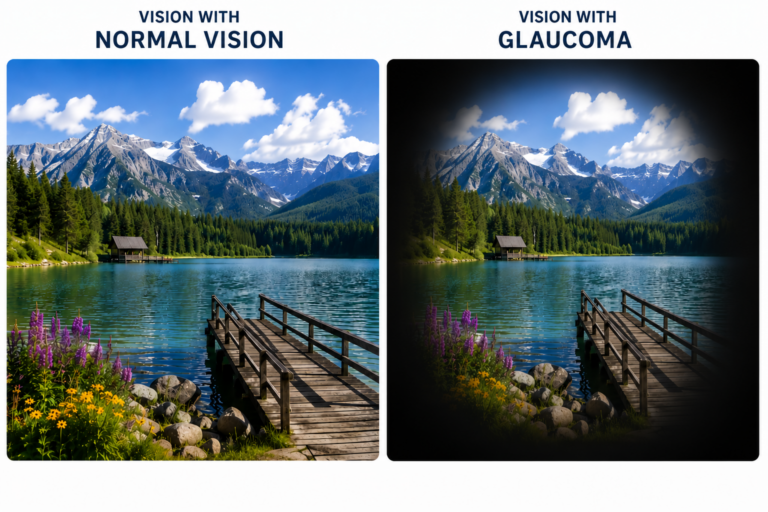
Glaucoma is a progressive eye disease in which damage to the optic nerve can lead to irreversible vision loss and, if left untreated, blindness. In approximately 80% of cases, glaucoma is associated with elevated intraocular pressure (eye pressure).
The most common form is primary open-angle glaucoma, in which the drainage channels (trabecular meshwork) remain open but become less efficient at draining fluid from the eye, resulting in a gradual increase in intraocular pressure. Less commonly, angle-closure glaucoma occurs when the drainage angle between the iris and cornea becomes narrowed or blocked, preventing normal fluid outflow and causing a rapid or gradual rise in eye pressure.
LEARN MORE ABOUT GLAUCOMA
GLAUCOMA SURGERY
FREQUENTLY ASKED QUESTIONS
Things To Know About Glaucoma
Glaucoma is typically asymptomatic and slowly progressive. It is diagnosed with eye examination by testing the eye pressures, optic nerve and visual fields.
Glaucoma can be treated in 3 ways.
- Eye drops to lower eye pressures
- Glaucoma laser (SLT LASER)
- Surgery
Eye drops are a non-invasive treatment option for glaucoma. However, approximately 1 in 5 patients may develop red, irritated eyes due to an allergic or sensitivity reaction to the medication.
Laser treatment for glaucoma is a safe, minimally invasive procedure that is performed in the office. It is a modern treatment option with an approximate 75% success rate in lowering eye pressure and reducing the need for eye drops.
When laser treatment and medications are insufficient, surgery may be recommended. Common glaucoma operations include:
Trabeculectomy – a traditional filtering (open) surgery that creates a new drainage pathway for fluid.
Glaucoma drainage devices (tube shunts) – such as the Paul glaucoma valves, which divert fluid from the eye to lower pressure.
Minimally invasive glaucoma surgery (MIGS) – using devices such as the iStent, XEN Gel Stent, or PreserFlo MicroShunt to improve fluid drainage with less invasive techniques.
In patients with angle-closure glaucoma, the drainage angle of the eye is narrow or blocked. Treatment usually involves creating a small opening in the iris with a laser (laser peripheral iridotomy) to improve fluid flow within the eye. Many patients with angle-closure glaucoma also benefit from cataract surgery, which can further widen the drainage angle and help lower eye pressure.
The risk factors for glaucoma are:
- High eye pressures
- Family history of glaucoma
- Near sightedness (myopia)
- Cortisone use (drops, skin, oral or nasal sprays)
If you have a family history of glaucoma or an optometrist is concerned about glaucoma after examining you for spectacles, you will need to see an ophthalmologist for pressure testing and nerve scans to determine if you require any glaucoma treatment.

WHAT ARE GLAUCOMA STENTS
Glaucoma stents are a minimally invasive surgical implant that slowly drains eye fluid from inside the eye to outside the eye (under the conjunctiva). It is a modern surgical technique for glaucoma management. There are several stents available, all with different modes of action and made from different materials.

FREQUENTLY ASKED QUESTIONS
Things To Know About Glaucoma Stents
The stents are placed into the eye during surgery in a theatre. They can be implanted by themselves or during a cataract operation. It takes 10-15 minutes to implant a stent and typically there are either no sutures or minimal amounts of cutting / sutures required. (XEN STENT)
Stents, as with all surgeries, can have potential complications. Intraoperatively, they can rarely cause bleeding, which is in the vast amount of cases, self-limiting and resolves spontaneously. Post-operatively, in the early period, the stent can lead to rapid drainage of fluid and low eye pressures which can cause blurring of vision. This is typically managed with eye drops and also resolves spontaneously. During the first 3 months the biggest problem with stents (10-30% depending on type of stent) is scarring of the outflow tip of the stent. This can cause the eye pressures to increase again and the patient might require a second procedure in the consulting room or theatre to remove the scar tissue, to allow better drainage of the stent again.
Later on, the extremely rare complication of infection can happen (even years later) which can lead to internal infection of the eye and cause significant vision loss. A bothersome problem with some of the stents can be the formation of a cyst under the eyelid (cystic bleb). This is due to the stent draining very well under the conjunctiva and forming a bubble there that cause irritation and scratchy sensation to the eye. This might also need a late second operation to remove the cyst.
There are now long-term studies (nearing 10 years) of stents and they all show a very good reduction in eye pressure – similar to trabeculectomy (major surgery). The stents might require eye drops later, but often can allow a patient to be free of drops for many years.
WHAT IS GLAUCOMA LASER
Glaucoma laser is called Selective laser Trabeculoplasty or SLT. This is a modern treatment for glaucoma although it was initially conceived in the 1980’s and then rebirthed in the 2000’s with modern lasers. During the procedure, energy is applied to the outflow channels of the inner eye, called trabecular meshwork (TM). It must be noted that no tissue is cut and no holes “blasted” in these areas. Instead, very low power energy is applied. The suggested mode of action is that the laser stimulates minor inflammation in the outflow channels, which causes the body to send white blood cells and other anti-inflammatory mediators to this area. These mediators then clean the outflow “pores” from blocked pigment and other cells. This then leads to improved outflow of eye fluid and lowering of the eye pressure.
FREQUENTLY ASKED QUESTIONS
Things To Know About Glaucoma Laser
The procedure is performed in the consulting rooms and not in theatre. The eye is numbed with anaesthetic drops. The head is positioned on a microscope device to allow the doctor to view your eye. He places a contact lens device on the surface of the eye which allows him to see the inner outflow channels of the eye. This process is not sore but can be a strange feeling / sensation. The energy is then applied circumferentially around the inside of the eye and is typically not painful but patients describe an occasional “electric jolt”.
The procedure takes about 10 minutes to perform. After the procedure, the patients typically have blurred vision for 2-48 hours. Patients often describe the feeling as looking through fog / mist. You should bring a driver with as you will likely not be able to drive due to the transient blurring. Ideally take off 2 days from work after the procedure. After the procedure, you will place anti-inflammatory eye drops 2 x per day to the lasered eye for 7 days and return in 6 weeks to recheck your eye pressures.
The SLT laser procedure is very safe with virtually no side-effects, barring the transient blurry vision for 2 days. It is very effective, with more than 75% of patients achieving a very good reduction in pressure. The pressure reduction effects last for 10 years in up to 2/3 of patients. SLT laser can also be repeated later. A very good randomised study was performed in 2021 (LIGHT study), which showed that after three years there was no difference in efficacy of using drops versus getting SLT laser. It did however show the patients who received laser, required less glaucoma surgeries later than patients who were using eye drops to lower their eye pressures.
They are both equally successful in lowering eye pressures. However, SLT laser is a once off procedure whilst eye drops need to be used for the rest of your life on a daily basis. If you skip or miss a day, then the glaucoma can slowly worsen. Eye drops can also cause irritation or allergies in a significant number of patients. Eye drops are however as successful as the laser in lowering the eye pressures and are still very useful in many glaucoma cases.