
WHAT IS A CATARACT
A cataract develops when the eye’s natural lens — a small, clear structure behind the coloured part of the eye (the iris), about the size of a Smartie — becomes cloudy. This can cause blurred or dimmed vision. Common complaints include diiculty reading, trouble driving at night, not being able to see TV subtitles clearly, and struggling to follow a golf ball.
People may also notice haloes around lights or find it harder to see in low light.
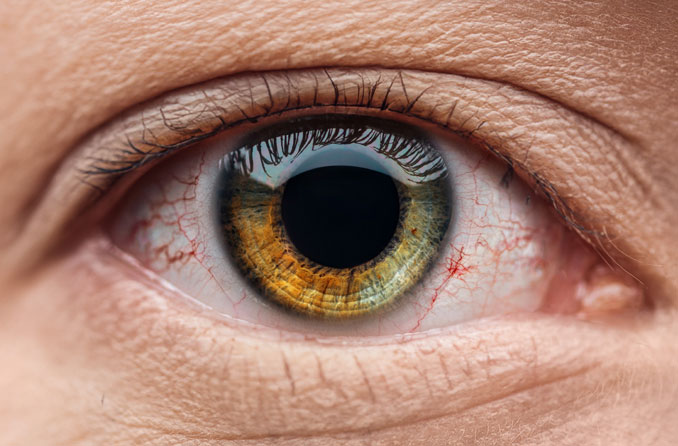
EYE WITHOUT CATARACTS
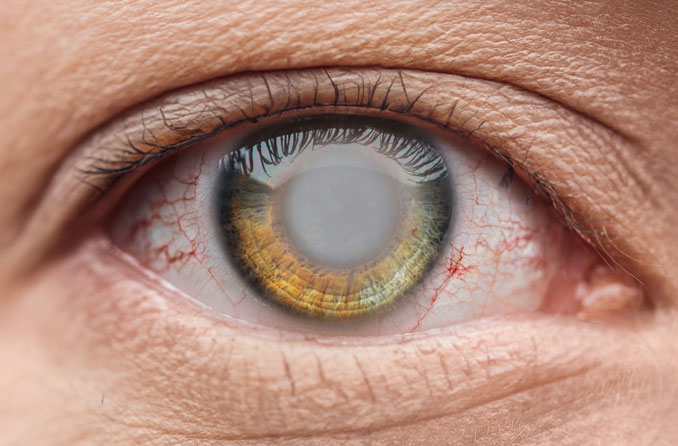
EYE WITH CATARACTS


FREQUENTLY ASKED QUESTIONS
Things To Know About Cataracts
In the past, cataracts were only operated on when they were “ripe” or mature because surgery was less advanced and carried a higher risk of complications. Today, modern cataract surgery is safe, predictable, and has very low complication rates, so surgery is recommended when cataracts become symptomatic.
If you experience blurred vision, glare, haloes, or difficulty with your vision, you are a good candidate for surgery. However, if you have a cataract but are comfortable with your vision and have no symptoms, surgery can usually be delayed.
Exceptions include cataracts that narrow the front chamber of the eye, increasing the risk of glaucoma, as these should be treated early. Cataract surgery may also be beneficial at an earlier stage for patients who are highly near-sighted or far-sighted, as it can reduce dependence on glasses and improve uncorrected vision.
Modern cataract surgery is quick and predictable. The operation is done as a day case where you come in to theatre for a few hours and go home after this. The operation is called a phacoemulsification and lens implant. In brief, the cataract is removed using ultrasound power and at the end of the case a new artificial lens is implanted in the eye. The operation is done under local anaesthesia and sedation, which is not painful. No sutures are used.
Your cataract surgery will be performed at our day surgery facility. On arrival, our reception staff will admit you (most paperwork will already have been completed). You will then be taken to the pre-operative area where nurses will check your blood pressure and glucose, administer eye drops to prepare your eye, and help you get ready for surgery. You do not need to change out of
your clothes—a surgical gown is worn over them. Please do not wear makeup on the day of surgery. Lockers are available for your belongings, but phones are not permitted in theatre. Hearing aids on the side of the operation must be removed before surgery, as they can be damaged during the cleaning process.
Before surgery, you will meet the anaesthetist, who will review your medical history, chronic conditions, and medication allergies. An IV line will be inserted for sedation. While you are deeply sedated, a local anaesthetic injection will numb the eye. During the operation, you will remain comfortably drowsy and may even sleep, although you may be partially aware of your surroundings. If you are very anxious or claustrophobic, please discuss the option of a general anaesthetic with Dr Du Toit before surgery.
After the procedure, your eye will be covered with a soft pad and protective plastic shield. You will recover in the post-operative area, where refreshments will be provided. Once you are comfortable and stable, your family or friend may take you home.
At home, you may rest, read, or watch television. Avoid heavy lifting or straining. Your eye should
not be painful, although a mild headache is common. Temporary numbness of the forehead, scalp, or cheek from the anaesthetic may last 12–24 hours. If you experience severe eye pain at any time, contact the emergency number immediately, even during the night.
Modern cataract operations are very safe with very few complications. As with any surgery on any body part there are potential complications that can occur. Most of the problems after cataract surgery are minor and even the major problems can be dealt with good outcomes in most cases.
Major Complications:
- Endophthalmitis (Internal Eye Infection):
- Occurs in 1/10000 cases.
- Risk factors: Poor immune function, eyelid infections (blepharitis).
- Treatment may involve eye injections (antibiotics) and repeat eye operation.
- Permanent blindness can result.
- Corneal Decompensation:
- Inner pump layer of the cornea damaged during the operation.
- Occurs in patients with poor pump layer function.
- Swollen cornea post-operatively, not fully transparent.
- Risks: Old age (>85 yrs), neglected cataracts.
- Management may require a layered internal corneal transplant.
- Damage to Capsular Bag:
- Cataract housed in a thin ligament capsule bag.
- Surgery can damage or weaken the bag.
- Alternative lens or second operation may be necessary.
- Rarely, a cataract fragment may dislodge into the back of the eye.
- Retinal Swelling (Macular Edema):
- Occurs in 1/1000 patients.
- Common in diabetic patients and those with pre-existing retinal issues.
- Management: Eye drops, possible injections, rarely retinal operations.
- Most cases resolve spontaneously.
- Retinal Detachment:
- Uncommon (<1%) after cataract operations.
- Higher risk in high myopic patients, those with astigmatism and previous retinal damage.
- Managed with vitrectomy retina operation, with potential permanent vision damage.
- Warning signs include new flashes, floaters, and peripheral shadows.
Minor Complications/Problems Post-op:
- Dry Eyes:
- Extremely common.
- Temporary increase in dryness for about 6 weeks.
- Pre-existing dry eyes may worsen.
- Management before and after surgery is crucial.
- Refractive Error:
- Determining the best lens for implantation.
- About 90% accuracy, some patients may be slightly near or far-sighted.
- Correctable with glasses, contact lenses, or a second surgery.
- Funding may be required, not always covered by medical aids.
- Double Vision:
- Uncommon.
- Causes include unmasking of stable double vision or transient muscle damage.
- Resolution over time, sometimes requiring prism glasses or squint operation.
- Pre-operatively
- Do not wear make-up on the day of surgery (The eye will be thoroughly cleaned with antiseptic and we prefer no mascara or similar material to be in the tear film when the operation is performed)
- Pre-operatively
- Take only the necessary belongings to the theatre
- If you are having the case under sedation, avoid food or drink for 4h before arriving to theatre
- If possible bring a list of your current medications with you
- Use all your medications as usual even on the day of surgery
- Some of the more Important conditions to bring to the attention of nurses and anaethetists is:
- Porphyria
- Sickle Cell Disease
- Blood thinners or bleeding tendencies
- Claustrophobia or anxiety
- Immunity problems
- Previous allergic reactions
- Some of the more Important conditions to bring to the attention of nurses and anaethetists is:
- Post-operatively
- Do not drive – the sedation can affect your coordination
- Rest
- Avoid strenuous activities
- Avoid sleeping on side of the eye that was operated
- Keep patch on over night until you are seen at the consult rooms in the morning
- You do not need drops over night, these will be started the next morning
- Post-operatively
Pain and Sensations:
- Eye should not be painful, but may feel scratchy or bruised for a few days.
- Severe pain or redness is a concern.
Redness After Anaesthetic Injection:
- Redness may occur due to a small conjunctival bleed after anaesthetic injection.
- Can persist for a week or two.
Initial Blurriness and Double Vision:
- Vision will be blurry on the 1st day after patch removal.
- Double vision is common initially due to numbing of eye muscles by anaesthesia.
Vision Improvement:
- Vision typically improves rapidly over the first 3 days.
- Fluctuant vision in the first 4 weeks, often due to dry eyes.
Dry Eyes:
- Common for 6 weeks post-operation.
- Important to manage dry eyes before and after surgery.
Other Common Experiences:
- Flashes in the side of the eye during the first week or two, usually not concerning if no vision problems or new floaters.
- Crescent-shaped shadow in vision due to light scatter from the edge of the lens (negative dysphotopsia); resolves over a few months.
Eye Pressures:
- Slightly high eye pressures on the first day are not uncommon.
- Temporary tablets or drops may be needed to control this.
What to Report:
- Worsening pain, vision, or redness should be reported.
Post-Operative Instructions:
- Each patient receives a post-operative bag with instructions and a leaflet.
- Emergency contact numbers provided.
- Daytime office contact available for questions, with a WhatsApp chat line.
Overall, the initial discomfort is normal, and certain visual changes are common but usually temporary. It’s crucial to follow post-operative instructions and report any concerning symptoms promptly.
This is an important discussion before the operation and it is very important for you to understand the planned outcome after surgery.
After removal of the cataract (natural lens which has opacified), a new clear intraocular lens is implanted in your eye. There are two types of lenses to implant – a standard “monofocal” lens (has only one focus point) and a “multifocal” lens (has 2 or 3 focus points).
Each of these lenses has pro’s and cons:
- Monofocal (one focus point):
- Can only make you see far OR near without glasses. You will need glasses for the other distance, be it far or near, depending on the choice of refraction aim.
- The clarity is 100% without distortion.
- This lens is covered by medical insurance.
- Multifocal lenses (more than one focus point)
- These lenses are very expensive (Co-payment will be required).
- They offer a range of vision which reduces the need for glasses after the operation.
- They can cause night time haloes and glare.
- They reduce the contrast by 5-8%.
- This implies a reduction in clarity of around 5-8% compared to the “normal” monofocal lenses.
- In general, if you are extremely motivated to not wear glasses after cataract surgery and you have normal eyes (barring the cataract operations), you do not drive much at night and do not mind slightly worse vision in exchange for being glasses free, then this is a good option for you.
- If 100% crisp, clear vision is very important to you and you do not like the idea of having any night time imperfection, then you will be best suited to having a standard lens implant (either for far or near vision without glasses) and then also wear a pair of spectacles for either near or far vision, depending on the choice of refraction aim.